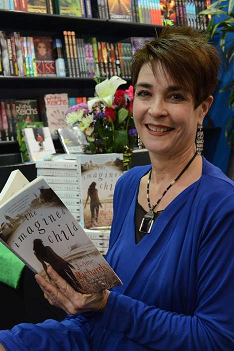
south african author
Jo-Anne Richards
Jo-Anne Richards is a South African novelist with five books to her name, whose work has been published internationally. A new non-fiction book is forthcoming from Jonathan Ball Publishers in April 2027. She holds a PhD in Creative Writing, teaches through All About Writing, and previously ran the Honours programme in Journalism & Media Studies at Wits University.
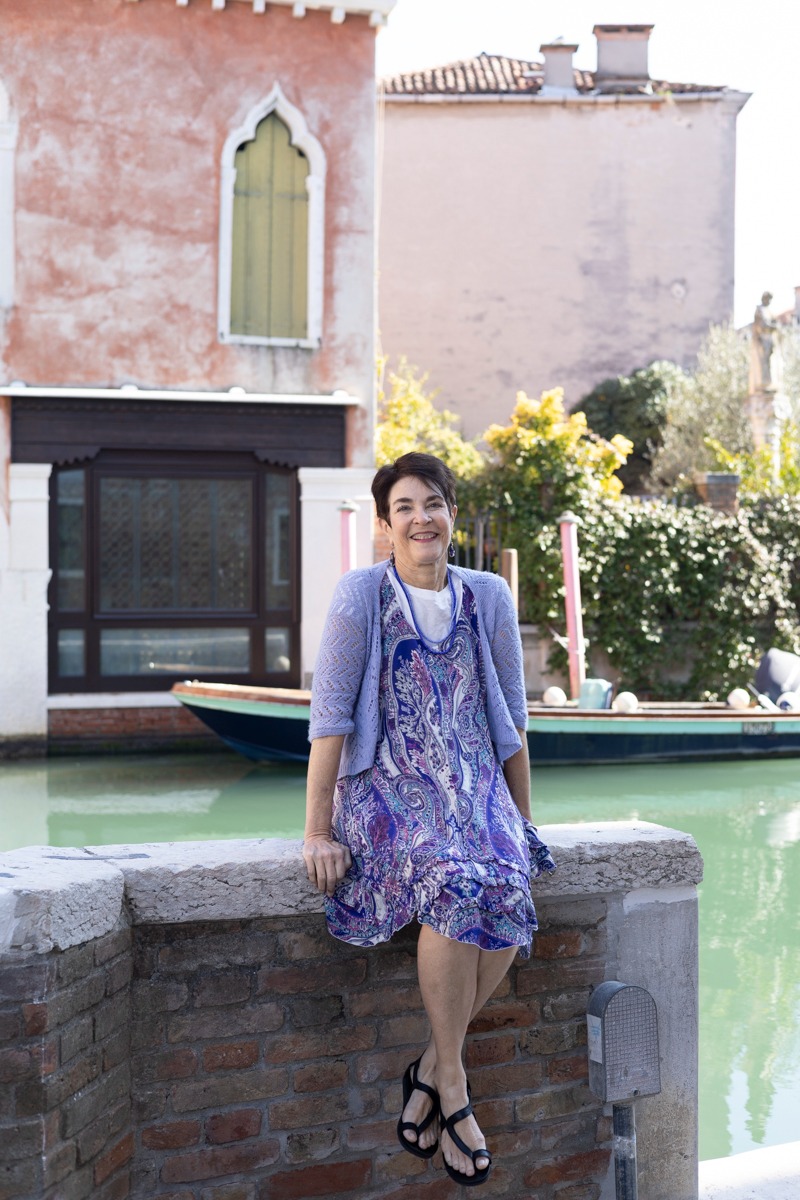
About me
I am a South African writer or, rather, I am a writer, and a South African. I have written five works of literary fiction and have published both internationally and locally. My first non-fiction work has been accepted for publication by Jonathan Ball Publishers and will appear in April 2027.
Up to now, I have been a writer of literary fiction, but what exactly does that mean? It does not mean ‘turgid’ or ‘esoteric’. I do not see ‘literary’ and ‘accessible’ as inconsistent concepts. For me, it means that I indulge my fascination with human complexity. I like nothing better than to dig around in our humanity to uncover, not how we’d like to be, but how we are, in all our glorious imperfection.
I try not to shy away from characters who behave as perhaps you might not, or in ways that you believe you wouldn’t. My characters want to do the right thing, but fall short; believe they are brave, but are ultimately betrayed by their mortal frailty.
I love the grey areas, because I believe that is where we can best discover who we are, and why.
What kind of writer am I?
I’m too much the old hack ever to expound. My early journalism training left me with a distaste for being lectured or ‘told’ how to think. It makes me rebellious, so why would I visit it upon my readers.
For me, writing is a seeking to understand, rather than a way of grabbing people by the throat and forcing them to understand what I think I know. We writers have no special access to an overarching truth. We are here to investigate, and leave you to discern the answers.
I think here of a novelist I admire, Michael Chabon, who writes that entertainment has become tainted – the very intention to entertain has become suspect, something ‘no literary genius’ would admit to.
Yet entertainment as he defines it, pleasure and all, remains the only sure means we have ‘of bridging … the gulf … that separates each of us from everybody else.
‘The best response to those who would cheapen it is … to reclaim entertainment as a job fit for artists and for audiences, not passive, but a two-way exchange of attention, experience and the universal hunger for connection.’
That’s exactly the exchange I’m after – not persuasion, but company.
What do I write about?
Life informs art. My novels are not plucked purely from the imagination.
They’re formed through a mix of observation and research. That’s why literature is important. It draws us into the lives of others, through which we can more clearly see our own.
As a journalist who became a writer of fiction, I believe that fiction can often reach a deeper truth, and say the unsayable. It has allowed me to play with emotions and attitudes that no one would admit to on the record.
I believe in entering issues through people – and by telling stories. I write of ordinary people facing extraordinary circumstances. I conjure a time – and show the pressures exerted by my characters’ particular place in history.
My novels are firmly set in South Africa – our particular ‘extraordinary’, with all the moral and emotional dilemmas that presents. Yet, I like to think that, even if you’re not a scholar of the time, and don’t nurture a particular interest in our setting, you might be drawn to read of my all-too-human characters, who face quandaries both from their circumstances and from within.
Wherever they happen to be, in their particular time and place in history, my characters are universally mortal, and reveal aspects of who we all are.
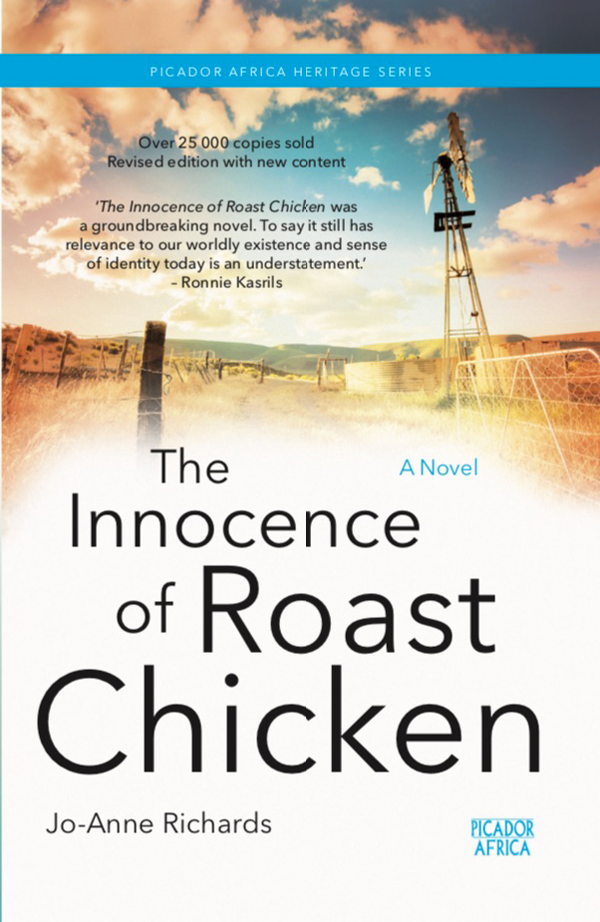
The Innocence of Roast Chicken
Jo-Anne’s first novel, The Innocence of Roast Chicken, was originally published in 1996 by Headline Review in the UK, and re-released in 2019 as part of the Picador Africa Heritage Series.
In this prestigious collection, her book joins those of writers like Frank Chikane, Ellen Kuzwayo, Nelson Mandela, Winnie Madikizela-Mandela, Pallo Jordon and Johan Steyn. The collection features ‘bestselling titles’ which Pan Macmillan believes ‘deserve rebranding and a new lease of life in bookstores and on readers’ bookshelves’.
When it first appeared, it topped the South African bestseller list in its first week and remained there for 15 weeks. It was nominated for the International Impac Dublin Literary Award, short-listed for the M-Net Book Prize and chosen as the 1997 Dillon’s Debut novel in London, to be showcased in UK book stores as an ‘outstanding first novel’.
The new edition of the novel includes new material in the form of an essay about her experiences as a post-apartheid writer and her writing journey since then.
More from Jo-Anne

The Imagined Child
Odette, a soap-opera scriptwriter, moves to the small Free State town of Nagelaten hoping to leave the chaos of Johannesburg — family trouble, a fraught relationship, a brush with violent crime — behind her. To the town, she appears to be a woman quietly recovering from heartbreak. They have no idea what she’s really running from.
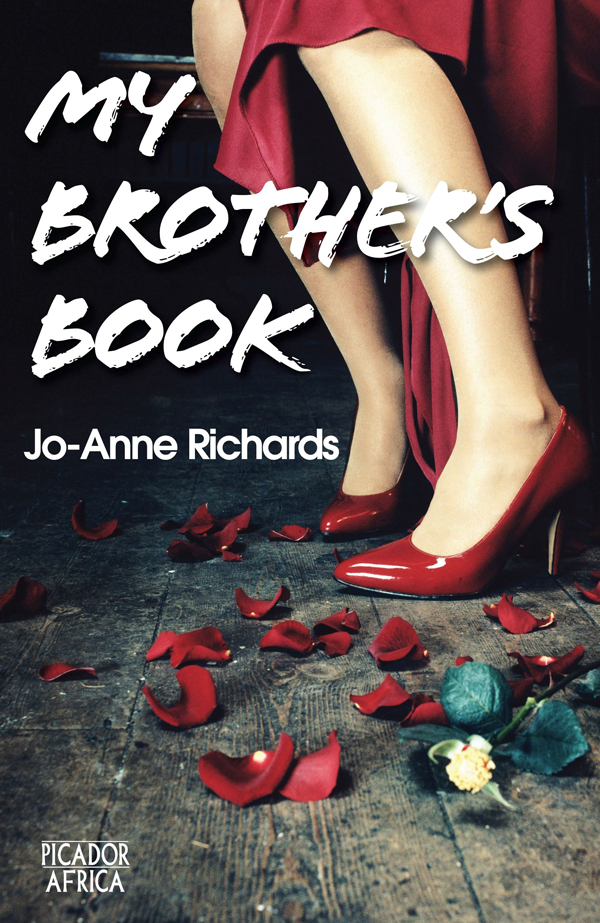
My Brother's Book
I was born on page 23 of my brother’s book. On page 52, before the whole world, I betrayed him. Spanning two siblings’ lives from a nomadic 1960s childhood to an uneasy adulthood in 2004 Johannesburg, this is a story of betrayal and atonement — and of a brother and sister forced to reconcile their fierce love with thirty years of anger.
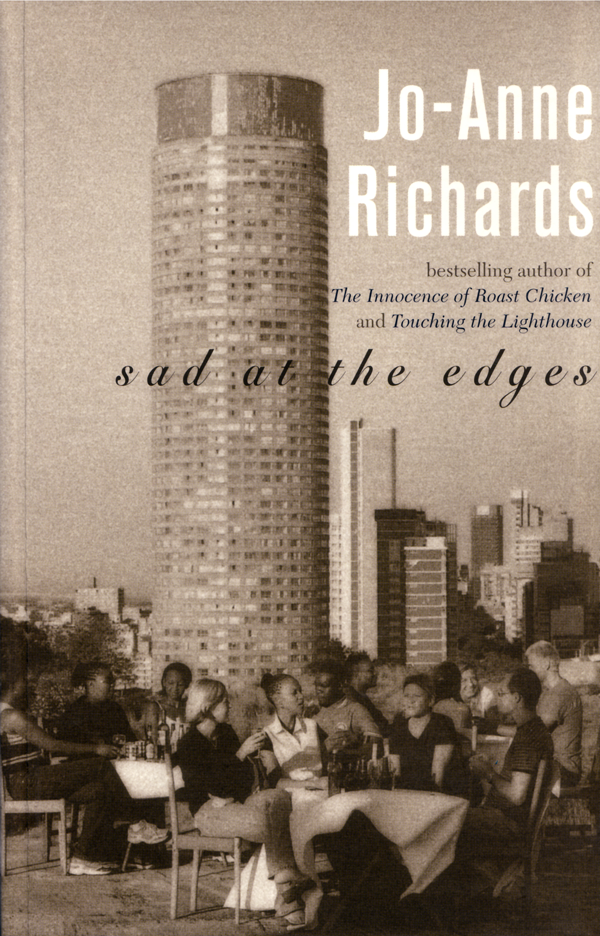
Sad at the Edges
Megan returns to Johannesburg from London to find her cousin Francesca using the appearance of an ordinary life to mask a darker past. As the city — restless, vivid, caught between euphoria and disenchantment — pulls them both into its extremes, Megan and Francesca are dragged toward a reckoning neither quite wants. A story of hope and recovery, told with the lyricism of The Innocence of Roast Chicken.
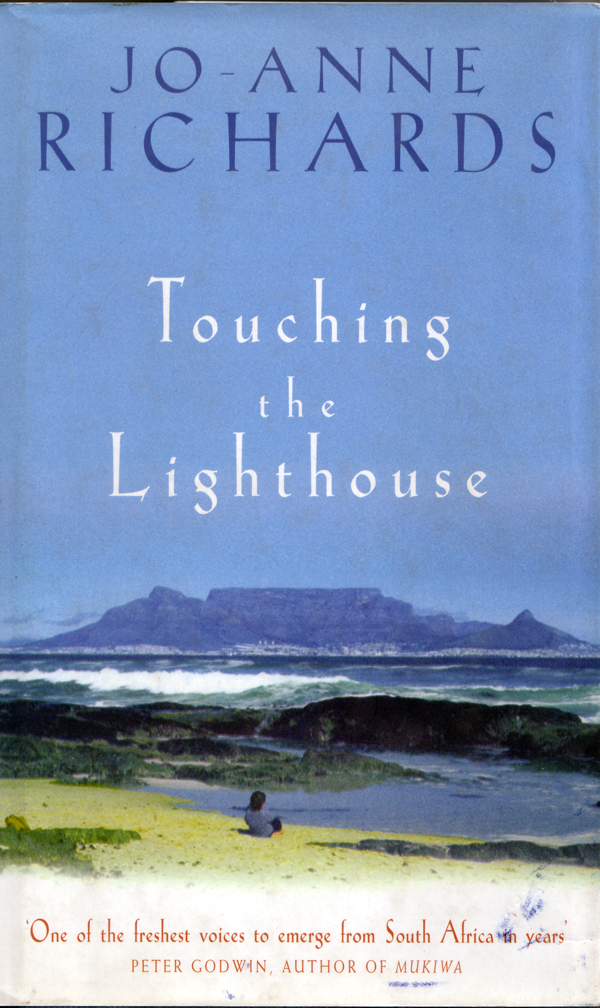
Touching the Lighthouse
Susan and Jennifer are two young women in search of their adult selves, in a South Africa charged with the tension of historic change. Their reckless passion finds an unsettling foil in Maud, their cleaner — perhaps the only one who can see where their futures are really headed. A worthy successor to The Innocence of Roast Chicken, written with the same acute sense of place and time.
More from Jo-Anne
The Imagined Child
Odette, a soap-opera scriptwriter, moves to the small Free State town of Nagelaten hoping to leave the chaos of Johannesburg — family trouble, a fraught relationship, a brush with violent crime — behind her. To the town, she appears to be a woman quietly recovering from heartbreak. They have no idea what she’s really running from.
My Brother's Book
I was born on page 23 of my brother’s book. On page 52, before the whole world, I betrayed him. Spanning two siblings’ lives from a nomadic 1960s childhood to an uneasy adulthood in 2004 Johannesburg, this is a story of betrayal and atonement — and of a brother and sister forced to reconcile their fierce love with thirty years of anger.
Sad at the Edges
Megan returns to Johannesburg from London to find her cousin Francesca using the appearance of an ordinary life to mask a darker past. As the city — restless, vivid, caught between euphoria and disenchantment — pulls them both into its extremes, Megan and Francesca are dragged toward a reckoning neither quite wants. A story of hope and recovery, told with the lyricism of The Innocence of Roast Chicken.
Touching the Lighthouse
Susan and Jennifer are two young women in search of their adult selves, in a South Africa charged with the tension of historic change. Their reckless passion finds an unsettling foil in Maud, their cleaner — perhaps the only one who can see where their futures are really headed. A worthy successor to The Innocence of Roast Chicken, written with the same acute sense of place and time.
‘Jo-Anne Richards displays a wonderful feeling for place and period ... her prose is sharply evocative, and she conjures up the child’s powerful feelings with a vividness intensified by nostalgia.’ – MARGARET WALTERS, The Sunday Times
-The Innocence of Roast Chicken
‘A rapturous and tactile evocation of dust, food, noises and a childhood do- main, rendered with a marked empathy for the child and the magical properties of a child’s stamping ground.’ – ELIZABETH BUCHAN, The Times
-The Innocence of Roast Chicken