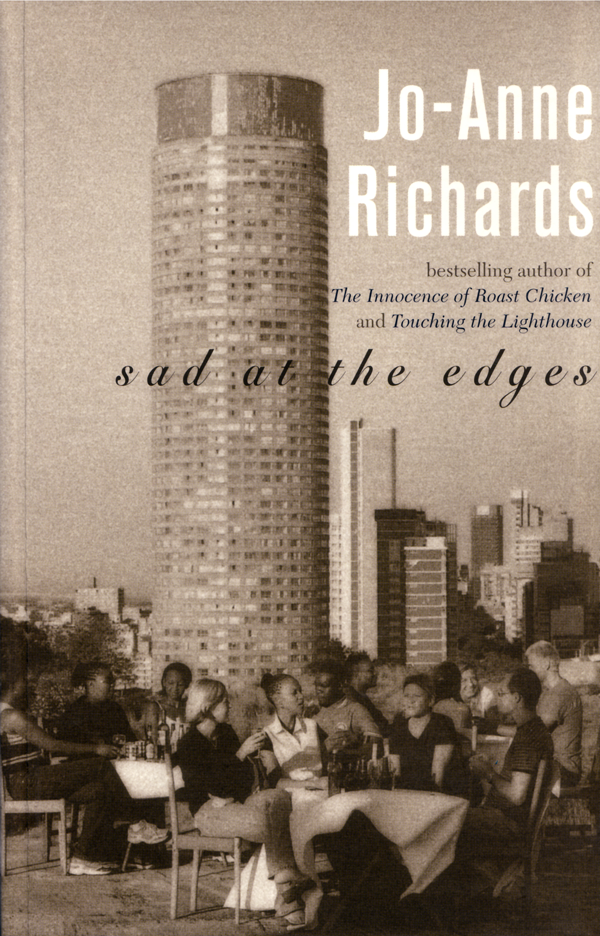
Sad at the Edges
Along the shores of the Eastern Cape, a disturbing story builds, that will have devastating effects on a settled life in Johannesburg.
A city in transition, Johannesburg is still gripped by a slightly faded euphoria, yet teeters on the edge of disenchantment. Megan returns from a sojourn in London to find her cousin Francesca using the normality of her life to obscure the dark imprint left by her past. Megan has little time for that though. She has discovered Johannesburg, in all its larger-than-life aspects.
Her life, and that of Francesca, seem to absorb some of the wild extremes of this vivid city. Megan meets it all head-on, while Francesca struggles to deal with a difficult marriage that cannot quite transcend the fears and freneticism of a new society, and a slightly impaired child.
In a time when people party to forget, and yet never quite let go, both Megan and Francesca will be dragged headlong into remembering before they are able to understand forgiveness.
This is a story of hope and recovery, told with the lyricism Jo-Anne Richards showed in The Innocence of Roast Chicken. The city is poetically dealt with and her flawed, but sympathetic characters wrestle with issues that are both uniquely South African and common to all people.
Author's Note on Sad at the Edges
They say it’s bad luck to produce a book with ‘Sad’ in the title. I have always hoped that isn’t true.
Originally, I wanted to call this book Karma City because it’s a story ‘of’, rather than ‘in’ Johannesburg. The city appears less as backdrop than a character in its own right. And as the protagonist says, ‘[It’s] Karma City … if you come here with pretensions, it’ll beat you about the head with them. It’ll turn your preconceptions on their head. And every mistake you’ve ever made will confront you over and over again.’
My publishers felt this might confuse readers about genre; that ‘karma’ would suggest New Age, possibly even self-help, subject matter. It was agreed that we would go with a phrase that also appears in the book: ‘Her lips quirked in a smile, sad at its edges.’
In many ways, it sums up my characters and their context. We trusted readers to see they were being promised, not a book filled with sadness, but something infinitely more complex, only a little sad at its edges.
This book will spirit you into the post apartheid madness of a euphoric Johannesburg, among ordinary people who haven’t yet processed the trauma and grief that their extraordinary society put them through.
Chronologically, it’s my third book and yet, psychologically, it was my second – difficult to write in the wake of the huge impact left by the first two. My debut, The Innocence of Roast Chicken, was a hard act to follow, particularly for a book with greater subtlety and more complexity.
That is the direction I believe my writing took. Innocence made the big statement – made it easy to see the world in blacks and whites. My subsequent writing attempts to explore the less comfortable space, where ordinary people struggle to live good and moral lives, in a society that makes that difficult.
This is a love song to Johannesburg, as a dynamic, fast-changing, truly African city. And I don’t believe another book in the post-apartheid canon has attempted, in quite the same way, to show the wildness and craziness of this society in transition.
Readers and reviewers have also pointed out that it’s the only book that has tried to give some voice to those on the other side – to the spies, the collaborators and interrogators, who emerged into that same melting pot of post-apartheid society.
This is not the main thrust of the book, but it is certainly a thread that it tugs on. As a writer, I am less interested in exploring the heroes and good guys, and far more interested in complexities and dark places of the human spirit.
As a rather insignificant cog in the broad Left, opposing apartheid, I came across men and women who placed themselves in positions of trust within the anti-apartheid movement, and who were later exposed as spies for the regime. To many, I still believe it seemed a game. Baby boomers, no doubt bred on the myths of the cold war, they saw themselves as ‘Joes on spook street’, moles using trade craft, creating legends of their own.
The consequences were not trivial, though. They were sometimes appalling. How did they live with themselves, having made friends with and, at least, appeared to share the values of the people they wronged. People died, others were jailed, as a direct result of their actions.
I don’t believe we can fully understand a society unless we enter into, and try to comprehend, the mind-set that exists in its many different facets. And that’s where I have muddled in, among the flawed and the damaged, those trying to do the right thing and those who were more culpable.
This is my third book, in which it is not as easy to see the rights and wrongs as in my debut novel. But it holds the reward of showing the complexities of a society in transition, where both the heroes and the complicit struggle for a place in the new society – sometimes within the same people.
Reviews: Sad at the Edges
After the novels of apartheid and of the state of emergency have come the novels of transition: Nadine Gordimer’s None to Accompany Me, Ivan Vladislavic’s The Restless Supermarket, Andre Brink’s Rights of Desire and, of course, JM Coetzee’s Disgrace. Jo-Anne Richards’s third novel sits squarely in this tradition . . . All in all, Sad at the Edges is a readable, relatively upbeat exploration of a new urban class and an optimistic evocation of a new future in which the past can be forgotten or at least forgiven. . .
– Michiel Heyns, Sunday Independent
… a fascinating emotional rollercoaster ride, frankly and brutally written, that gives a voice to the people who have fallen by the wayside in the aftermath of South Africa’s struggle against apartheid . . .It’s a part of the apartheid struggle that hasn’t been examined much in literature, and Richards does these men and women excellent justice in Sad at the Edges
- Di Caelers, Cape Times
Jo-Anne’s lyrical writing and disturbing story make this an engrossing book
- Wits Arena
Poignant, with flashes of humour, Sad at the Edges is an interesting look at how the effects of apartheid lingered even among those it did not directly harm. But more than that, it’s a warm story about anyone
- Daily Dispatch
More from Jo-Anne
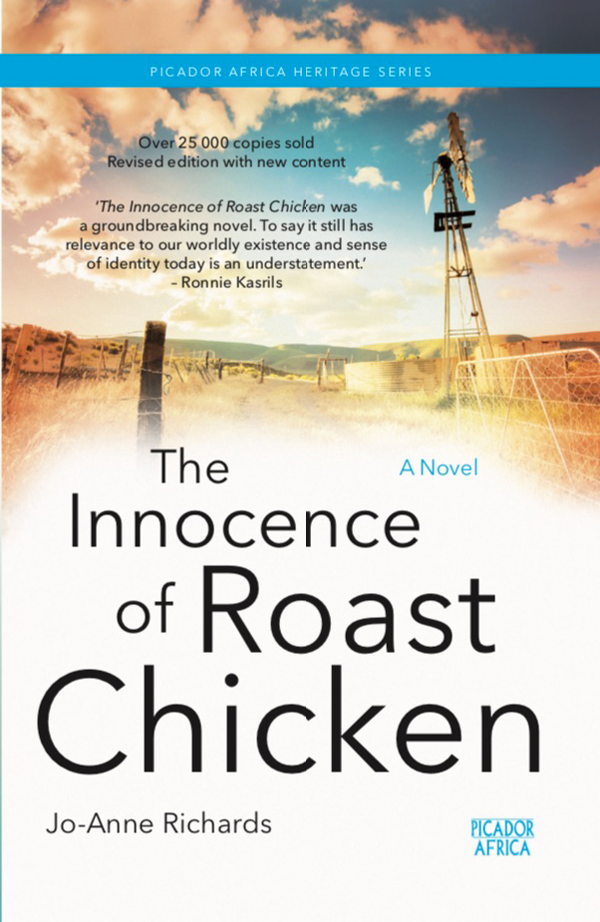
The Innocence of Roast Chicken
Set on a Free State farm in the 1960s, this is the story of an Afrikaans/English family’s seemingly idyllic life, seen through the eyes of young Kate — and the fragile web of relationships that a single, brutal incident will shatter. Years later, in the heady, uncertain Johannesburg of 1989, the past refuses to stay buried.

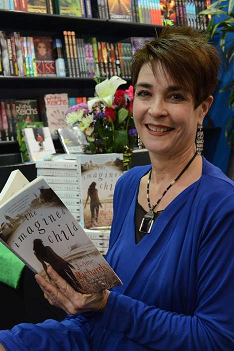
The Imagined Child
Odette, a soap-opera scriptwriter, moves to the small Free State town of Nagelaten hoping to leave the chaos of Johannesburg — family trouble, a fraught relationship, a brush with violent crime — behind her. To the town, she appears to be a woman quietly recovering from heartbreak. They have no idea what she’s really running from.
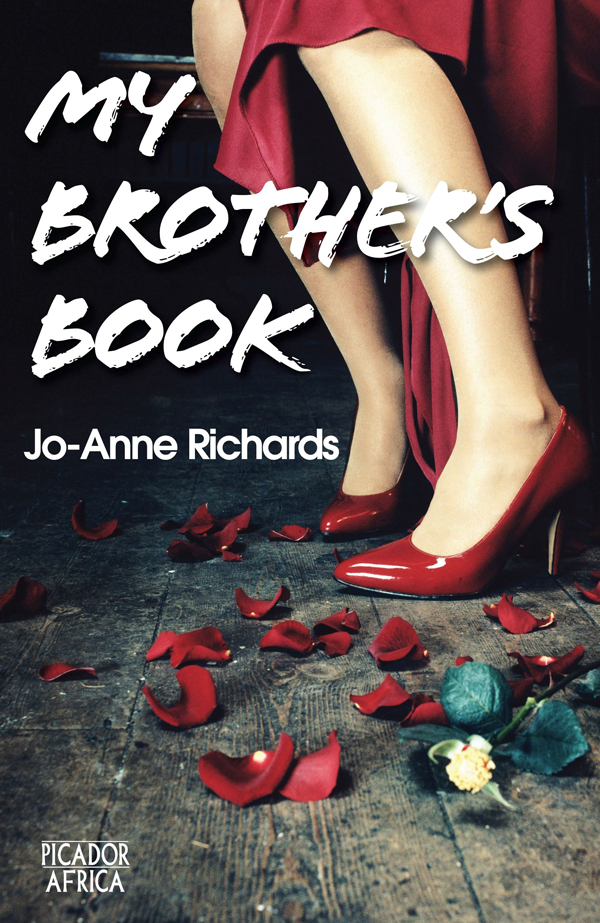
My Brother's Book
I was born on page 23 of my brother’s book. On page 52, before the whole world, I betrayed him. Spanning two siblings’ lives from a nomadic 1960s childhood to an uneasy adulthood in 2004 Johannesburg, this is a story of betrayal and atonement — and of a brother and sister forced to reconcile their fierce love with thirty years of anger.
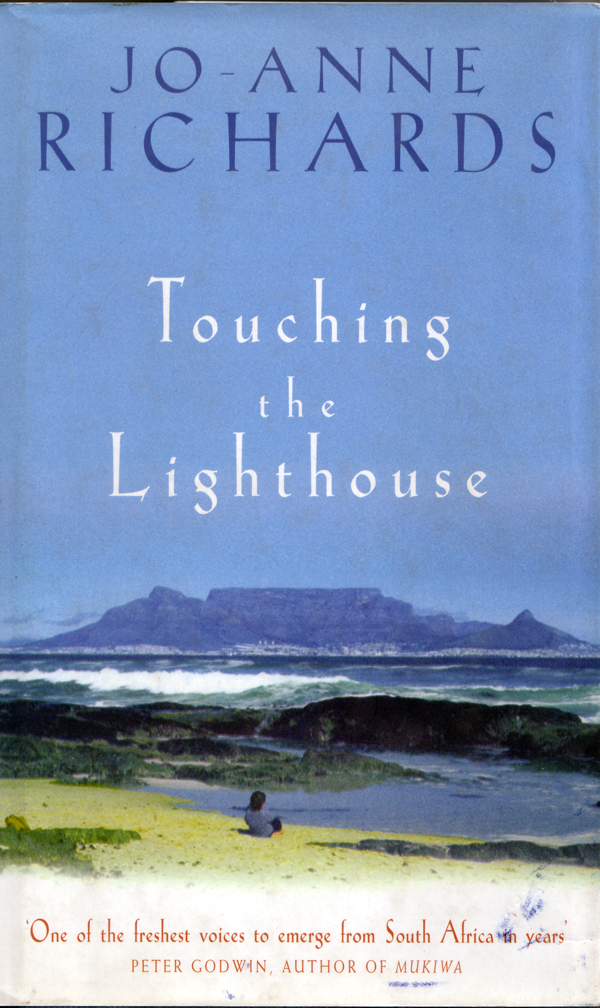
Touching the Lighthouse
Susan and Jennifer are two young women in search of their adult selves, in a South Africa charged with the tension of historic change. Their reckless passion finds an unsettling foil in Maud, their cleaner — perhaps the only one who can see where their futures are really headed. A worthy successor to The Innocence of Roast Chicken, written with the same acute sense of place and time.