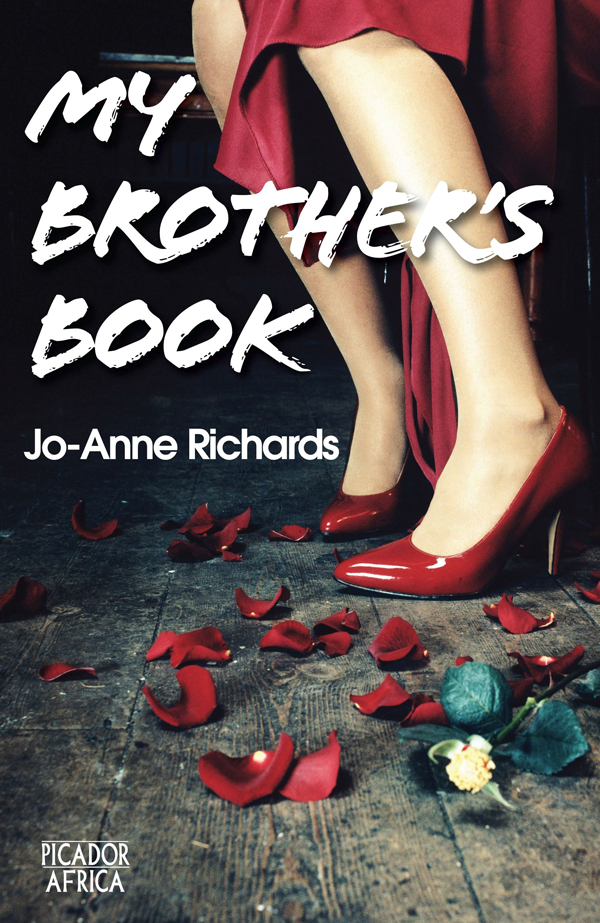
My Brother's Book
A poignant and evocative tale of the ways in which seemingly minute choices can destroy lives and relationships – Leisure Options
“I was born on page 23 of my brother’s book. On page 52, before the whole world, I betrayed him.”
My Brother’s Book tells a story of betrayal and atonement that spans the lives of two siblings from their nomadic childhood in the Eastern Cape in the 1960s, to their adulthood in 2004 in Johannesburg.
While the nation struggles to come to terms with its past, Lily struggles with her guilt about her careless betrayal of her brother, Tom, which destroyed his life and their relationship.
Tom confronts this fraught past by writing a memoir. But both Lily, and Tom’s former lover Miranda, take issue with the way his book remembers their shared pasts. The two women begin to unravel “the way it really was”. They tell a story of love and loss, of revolutionary fervour – and failure.
As the past unravels, so do Tom’s certainties about his relationship to his estranged family and to his nation. His life is thrown into further confusion and chaos as Lily uncovers a secret that will force him to confront his past.
Jo-Anne Richards has written a poignant and evocative tale of the ways in which seemingly minute choices can destroy lives and relationships.
She beautifully captures the complexities and nuances of a relationship between two siblings struggling to reconcile their fierce love for one another and the thirty-year anger that has divided them.
My Brother’s Book explores the most intimate aspects of betrayal and deception set against the backdrop of a nation striving to understand the consequences of its terrible and traumatic past.
My Brother’s Bookis both tragic and intensely hopeful as it charts its characters’ paths from guilt and betrayal to atonement and redemption.
Author's Note on My Brother's Book
Computers are amazing things. You can always tell what someone’s been researching by the spam they attract. While I was writing My Brother’s Book, mine apparently decided I was in the market for surface-to-air missiles ‘from our supplies in Kazakhstan’, and a bestselling submachine gun with armour-piercing ammo. Religious tracts arrived too, presumably hedging their bets.
That’s what comes of creating a character who studies for the priesthood, segues into liberation theology and then detours entirely into an underground operative in the liberation struggle.
That’s not what the book is about though. Yes, it is set in a time that allows Tom to play out trade craft and set up dead letterboxes, in his resistance against the apartheid regime. But that is not its focus.
It’s about family. And that means, I suppose, almost inevitably, that it’s about rage and betrayal. But it’s also about love, and attempts at atonement.
It has always fascinated me that children, with the same parents and identical backgrounds and modes of discipline, can sometimes evolve into polar opposites. Tom and Lily form two sides of the same coin. Their lives are adversely affected by their society, but they show how differently individuals can be marked by the same experiences.
The very nature of their childhood becomes a battleground of memory. How Tom and Lily perceive those years – rather than what ‘actually happened’ – is what determines who they become.
My Brother’s Book began, then, with these rather high ambitions. It makes an attempt to deal with an elusive concept we perennially grapple with – truth. Since I’ve never been one to shy away from an impossible challenge, it is this I’ve partly gone in search of, in this novel.
Does truth exist at all, among its many versions? And even if it does, can we ever find it, buried beneath the conventions we use to obscure ourselves.
Culture can offer us comforting stories to live by – but those same stories can also be where the truth goes to hide.
But again, the book does not labour under these abstruse concepts. It tells a story. In all my writing, and particularly in this, I keep my focus tight, concentrating on the personal, the individual characters who are strugging to make sense of their lives.
My Brother’s Book, which appeared in 2008, follows a brother and sister through three stages of their lives. Their childhood is played out in small-town Eastern Cape and sets the scene for their adult lives. Products of the same unconventional upbringing, they grow up to be completely different people.
Their childhood is overshadowed by a charismatic rogue of a father and both characters are marked by him in different ways. Lily has his heedless joie de vivre, while Tom, as the elder child, is forced to grow up too fast. He sets about being as unlike his father as he can – yet his adult life shows an uncanny resemblance to Pop’s in one or two significant areas.
In many ways, theirs is an ideal childhood. They experience the geographical freedom of small-town life and the psychological freedom of a father who treats them as ethical beings. Yet, theirs is a childhood characterised by insecurity.
Accepted completely by neither black not white, they are the scruffy outsiders, forced to skip towns at midnight. They live out a peripatetic youth in a series of boarding houses while their father travels and dreams. Pop fills Lily with the belief that charm and audacity will always land them on their feet, but Tom takes on the role of quasi-parent.
Tom blames Pop for their having no mother. And he blames his absent mother even more. For him, healing must come from understanding the pressures their world forced on both parents, and forgive them for their attempts to do the right thing in impossible circumstances. Lily needs to come to terms with their childhood too, and accept the damage it caused her brother. Most importantly, she needs to forgive herself for her careless betrayal of him.
I don’t know whether Tom and Lily ever fully agree on what happened to them. I’m not sure families ever do. Perhaps that’s the most honest thing the book has to say: that we don’t need a shared truth to find our way back to each other. Just a willingness to keep trying.
Reviews: My Brother's Book
My Brother’s Book is her most ambitious work to date. Moving subtly between past and present, it casts a searing light on the way we reveal and conceal our truths in stories
– Ivan Vladislavic, author of Portrait with Keys (winner of the Sunday Times Alan Paton Award) and The Restless Supermarket (winner of the Sunday Times Fiction Award)
Few South African writers can capture the complicated magic and cultural confusion of a constantly changing country like Jo-Anne Richards can. My Brother’s Book is wry and moving and beautifully observed
- Peter Godwin, author of When a Crocodile Eats the Sun and Mukiwa.
Happily, Jo-Anne Richards’ new novel, My Brother’s Book, provides all the thrills of reading one of SA’s great writers, and more besides: in this, her fourth book, Richards has upped her game from a pretty high point and written her best book yet
- Jennifer Crocker, The Weekender
My Brother’s Book is a richly told story which manages to keep its secrets well hidden until the very last. Above all, it can be read as a meditation on truth, its unstable and highly individualised nature. The last part of the novel … offers a consolatory glimpse into the future of his fractured family and leaves one with a sense of hope and closure
- Karina Magdalena Szczurek, Sunday Independent
It combines the unputdownable element of the best thrillers with themes such as contested memory, betrayal and identity. A brilliant read
- Mervyn Sloman, Femina
Richards recreates small-town SA life in the latter part of the 20th century with a superbly wry, yet affectionate eye for detail. Poignant, subtle and evocative, this novel is one of the finest I’ve read all year
- Robyn Alexander, Marie Claire
…an intricately patterned novel about love, race and betrayal … From a writer’s point of view, the novel is elegantly framed … The childhood evocations of yearning, intensity and betrayal are superbly rendered, making the novel read flawlessly and engagingly …There is a deft twist in the tale, best left to the reader to discover, making this novel a worthy contribution to serious South African writing about identity, becoming, and the complex (not to mention unexpected) processes of self-discovery
- Professor Leon de Kock, Wits Review
’n Komplekse maar hoogse genotvolle verhaal oor die belewenis van waarheid binne gesins- en politieke verband. Net ‘n soutpilaar sal nie aangegryp word deur lily se hipnotiserende openingsin en haar oorrompelende weergawe van hul verlede nie. Richards se uitstekende landskap-beskrywings en vernuftige vasvang van ‘n tydsidioom spreek van ‘n gedugte talent. So ook haar vermoë om ‘n verhaal deur drie verskillende monde en tussen die hede en die verre verlede so oortuigend en spanningsvol te laat vlot
- Boeke Insig
The plot of My Brother’s Book is not straightforward … Keeping such a plot readable, as Richards effortlessly does, is a feat in itself. Yet below these entanglements is another layer, one that reaches to the core of a country at odds with itself … What makes My Brother’s Book a worthy addition to the canon of race-involved, white authored fiction (championed, perhaps, by Marlene van Niekerk’s Agaat) is the novel’s strong and visceral sense of “place” – its rootedness in the finely wrought detail of a certain scene at a certain time … It travels much further along the path that Richards mapped in 1996. The metaphors are more mature. It is expertly edited, the political allusions are subtler…
- Kevin Bloom, Sunday Times
If I had to say this book is about the iniquities of apartheid race laws and the way they damaged people – even white people – it would probably not encourage many people to read the book. But if I said it is about a fascinating family – two children and a father and their relationships – it might. The former description is true, but it is conveyed through the latter which brings it alive, makes it individual and gives it human interest through the characters that are drawn. Also there is the recording of a particular time and place which is worth reading for that alone
- Pat Louw, Wordstock, publication of Wordfest at the Grahamstown Festival of Arts
My Brother’s Book is a read which I found good for the soul – and the memory of those types of books always endures
- Stephanie Saville, The Witness.
What makes My Brother’s Book so successful is the sort of warmth and humanity we all seek. It is a well-told story, often funny and very recognisable
- Karin Schimke, The Cape Times
More from Jo-Anne
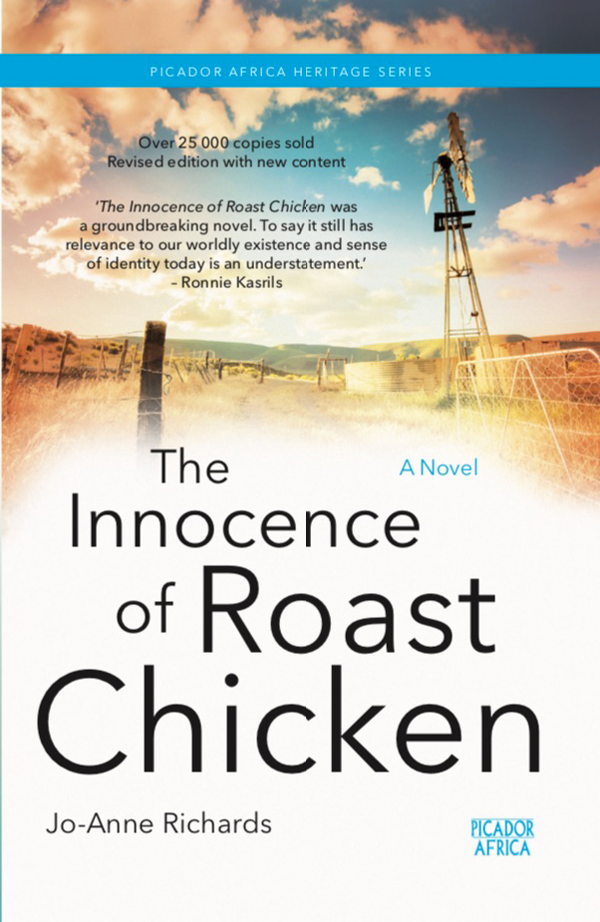
The Innocence of Roast Chicken
Set on a Free State farm in the 1960s, this is the story of an Afrikaans/English family’s seemingly idyllic life, seen through the eyes of young Kate — and the fragile web of relationships that a single, brutal incident will shatter. Years later, in the heady, uncertain Johannesburg of 1989, the past refuses to stay buried.

The Imagined Child
Odette, a soap-opera scriptwriter, moves to the small Free State town of Nagelaten hoping to leave the chaos of Johannesburg — family trouble, a fraught relationship, a brush with violent crime — behind her. To the town, she appears to be a woman quietly recovering from heartbreak. They have no idea what she’s really running from.
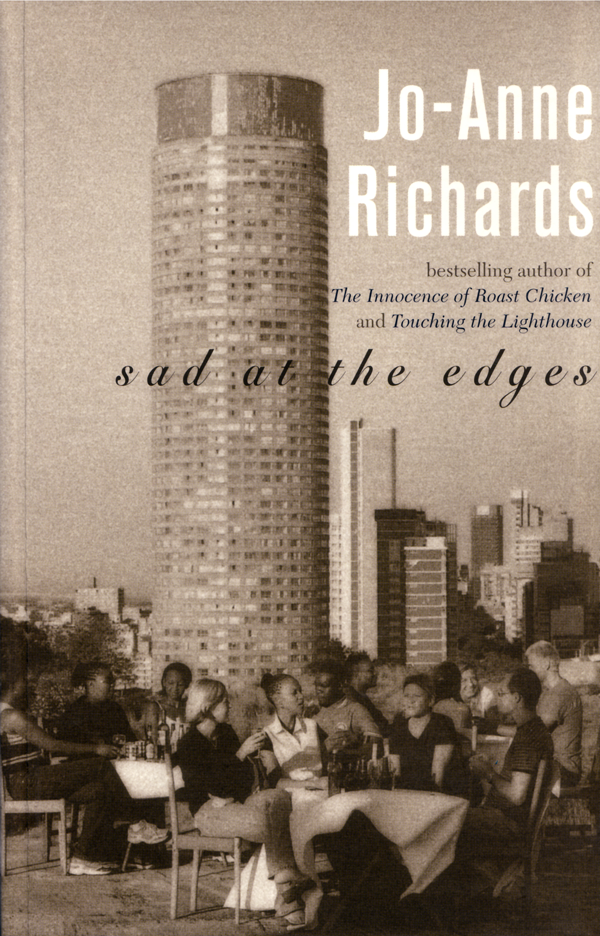
Sad at the Edges
Megan returns to Johannesburg from London to find her cousin Francesca using the appearance of an ordinary life to mask a darker past. As the city — restless, vivid, caught between euphoria and disenchantment — pulls them both into its extremes, Megan and Francesca are dragged toward a reckoning neither quite wants. A story of hope and recovery, told with the lyricism of The Innocence of Roast Chicken.
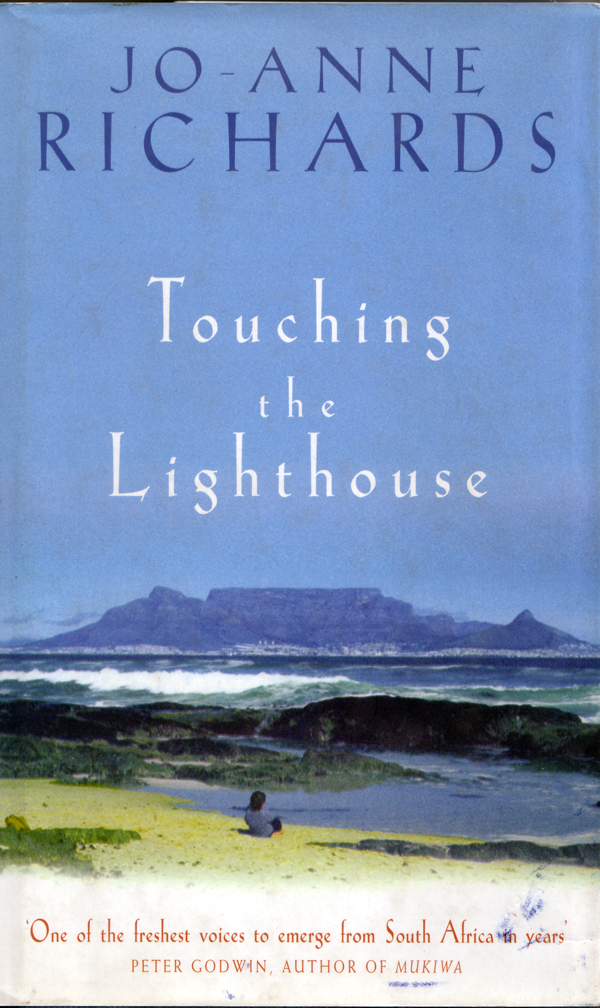
Touching the Lighthouse
Susan and Jennifer are two young women in search of their adult selves, in a South Africa charged with the tension of historic change. Their reckless passion finds an unsettling foil in Maud, their cleaner — perhaps the only one who can see where their futures are really headed. A worthy successor to The Innocence of Roast Chicken, written with the same acute sense of place and time.