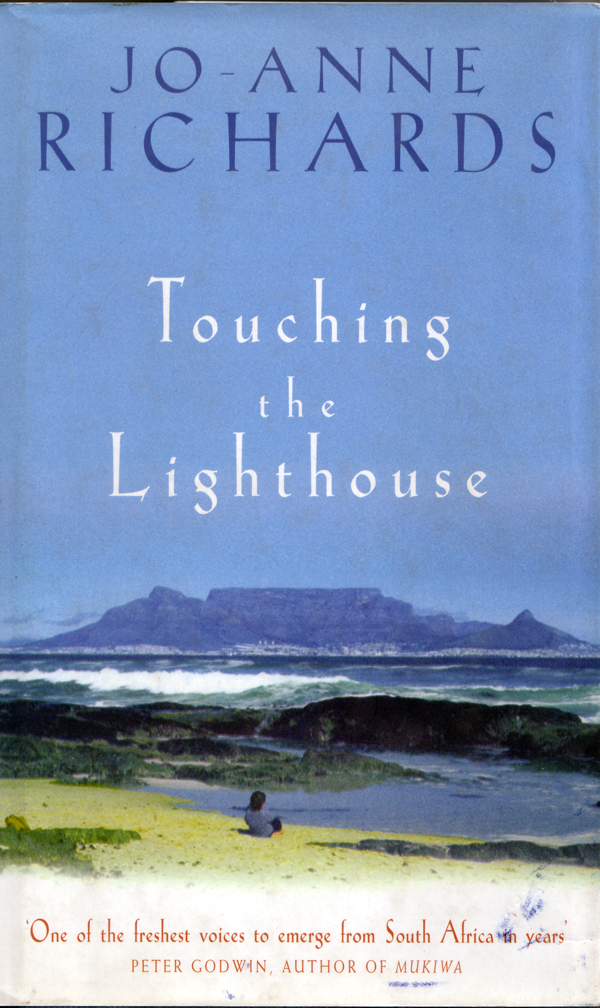
Touching the Lighthouse
Touching the Lighthouse is, on one level, simply the story of two young women in search of their adult selves – but they are living in the South Africa of recent history, which electrifies this story with the tension of conflicting perspectives. Their youthful recklessness and passion find a disturbing foil in their cleaner, Maud, who may be the oracle of their future – a future which will judge their individual struggle for maturity against the wider struggle for the liberation of South Africa itself.
Caught up in the tide of history, Susan and Jennifer find their friendship affected by the conflict mounting around them and their desire to be part of the process of change, at a time when justice itself is on trial.
The city of Cape Town is evoked through Jennifer’s eyes – an island of paradoxical vibrancy within the harsh struggles and contrasts of South Africa.
This is the tale of how Cape Town failed her – and how she in turn failed it, with its lights and shadows, its humour and all its tragedy.
Touching the Lighthouse is is written with the same sure sense of place and time which gave The Innocence of Roast Chicken its impact. It is a worthy successor to that novel.
Author's Note on Touching the Lighthouse
Second novels are notoriously difficult – particularly in the wake of a debut which makes a noise in the literary world.
Luckily, I had all but finished this novel when The Innocence of Roast Chicken, emerged, into a clamour of both acclaim and controversy. I’m grateful for that mercy, at least. It meant I wasn’t paralysed by self-consciousness and doubt in its writing. Nonetheless, this book, which appeared a year after, always felt like the younger child in thrall to its more popular sibling.
That’s not to say it didn’t do well in its own quiet way. Yes, it sold creditably and was well received. As Allan Massie wrote in The Scotsman (UK): ‘Her writing has the tang of authenticity … The result is as engrossing as it is impressive’, and the Daily Telegraph (UK) added: ‘A wise and substantial literary novel.’
From the city in which it was set, it received this acknowledgment: ‘It is perhaps most accurately through novels that we gain a sure perspective of what our past was about . . . Touching the Lighthouse forms an important part of the literary history of South Africa (Cape Times).
Yet, somehow, it has always remained in the shadow of Innocence. At the time it appeared, Innocence was not only still selling well, but was at the height of its controversial prominence. Touching the Lighthouse slipped in more modestly, with less fanfare.
I believe it deserves its own space in the world of books. It has something specific – and very different – to say. It captures a time and place, and immerses the reader in a particular sub-culture, within a changing South Africa.
Innocence tells the ‘big’ story – it underlines the evil that apartheid brought down on society, the damage it wrought in people’s lives. This book is both more complicated, and more subtle. It makes a real attempt to capture what those difficult years, during and in the immediate aftermath of apartheid, were really like for ordinary people. And, in the years since it appeared, countless readers have expressed what that meant to them, to read an account, not of heroes, but of average people, trying to live ordinary lives in an extraordinary society.
This novel is about people like you: flawed, complicated characters trying to navigate a time and place that made that difficult. Like Innocence, it is a coming-of-age novel. It captures the concerns of young people, disaffected by an immoral system, yet unsure of their role in helping bring it to an end.
It is the story of young people becoming adults, doing what young people do, being transgressive and reckless, meddling where wiser heads might not. But, because of their context, the consequences are so much greater than in any normal society.
This book is like a time machine. It will spirit you back into a society in flux. Where most people simply muddle through, trying to live their lives as best they can, the context of these characters made that impossible.
Innocence made the big statement and, particularly internationally, had the greater impact. I can understand that. People find comfort in large brush strokes; they prefer to confront difficult issues in blacks and whites, which are easier to understand and make sense of.
It’s less comfortable to be confronted by greys, where right and wrong are difficult to pin down; where, in trying to live their lives, young people can make themselves complicit.
That’s where this book lies, in the messy complexities of humanity. In the subtleties beyond the great rights and wrongs. It’s about people like you and me, trying to do the right thing, yet not always succeeding.
I believe this novel deserves to retain its place in the canon of post-apartheid fiction. I don’t think any other book has attempted to confront the complexities of this time in quite the same way.
And, as my second novel, it holds its place in my list of publications. It shows where I came from, and how I progressed as a writer through the books I would subsequently write.
Reviews: Touching the Lighthouse
Her writing has the tang of authenticity, so that it seems as if she is truly remembering rather than inventing . . . The result is as engrossing as it is impressive
– Allan Massie, The Scotsman.
… its intense relationship between two women, played out against a backdrop of a febrile, hypersensitised, schizophrenic city where emotions grow and decline like gusts of the Cape Doctor winds. A must-read for anyone familiar with the place.
- Philip Hoare, Books of the Year in the Gay Times. (UK).
A vivid picture of the times
-Judy Cooke, Mail on Sunday (UK).
A wise and substantial literary novel
-Daily Telegraph (UK)
It is perhaps most accurately through novels that we gain a sure perspective of what our past was about . . . as such, Touching the Lighthouse forms an important part of the literary history of South Africa
- Cape Times
Her sense of place is persuasive and the story she tells is an interesting one
-Mail and Guardian.
Touching the Lighthouse is written with the same sure sense of place and time which gave her first novel its impact and is a worthy successor
- Marlette Dodd, Leisure.
She is a lovely writer
-The Times (UK)
More from Jo-Anne
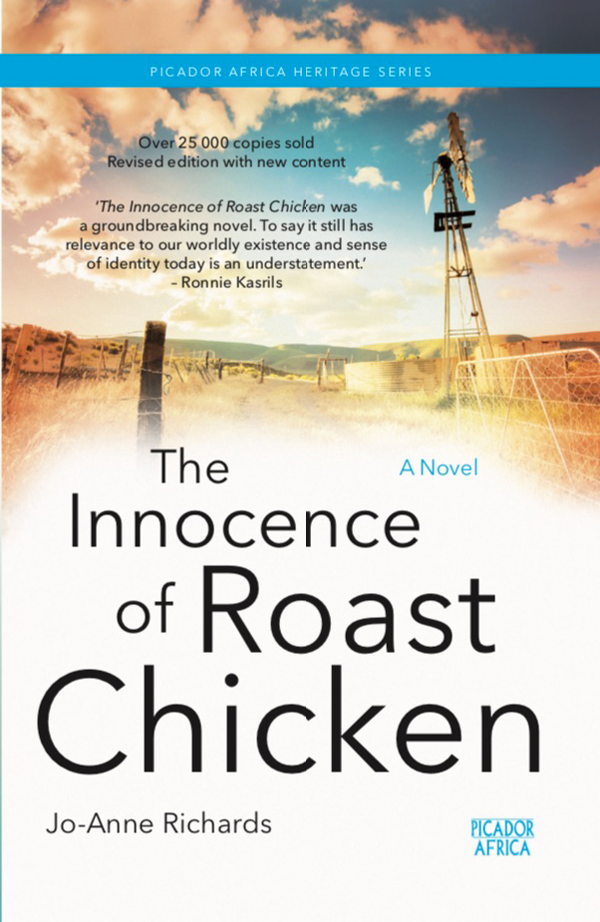
The Innocence of Roast Chicken
Set on a Free State farm in the 1960s, this is the story of an Afrikaans/English family’s seemingly idyllic life, seen through the eyes of young Kate — and the fragile web of relationships that a single, brutal incident will shatter. Years later, in the heady, uncertain Johannesburg of 1989, the past refuses to stay buried.

The Imagined Child
Odette, a soap-opera scriptwriter, moves to the small Free State town of Nagelaten hoping to leave the chaos of Johannesburg — family trouble, a fraught relationship, a brush with violent crime — behind her. To the town, she appears to be a woman quietly recovering from heartbreak. They have no idea what she’s really running from.
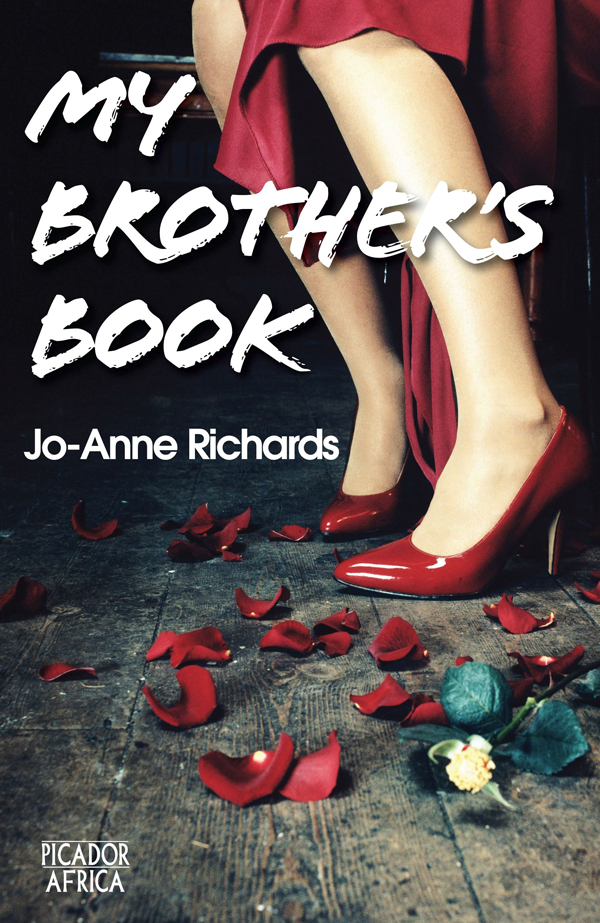
My Brother's Book
I was born on page 23 of my brother’s book. On page 52, before the whole world, I betrayed him. Spanning two siblings’ lives from a nomadic 1960s childhood to an uneasy adulthood in 2004 Johannesburg, this is a story of betrayal and atonement — and of a brother and sister forced to reconcile their fierce love with thirty years of anger.
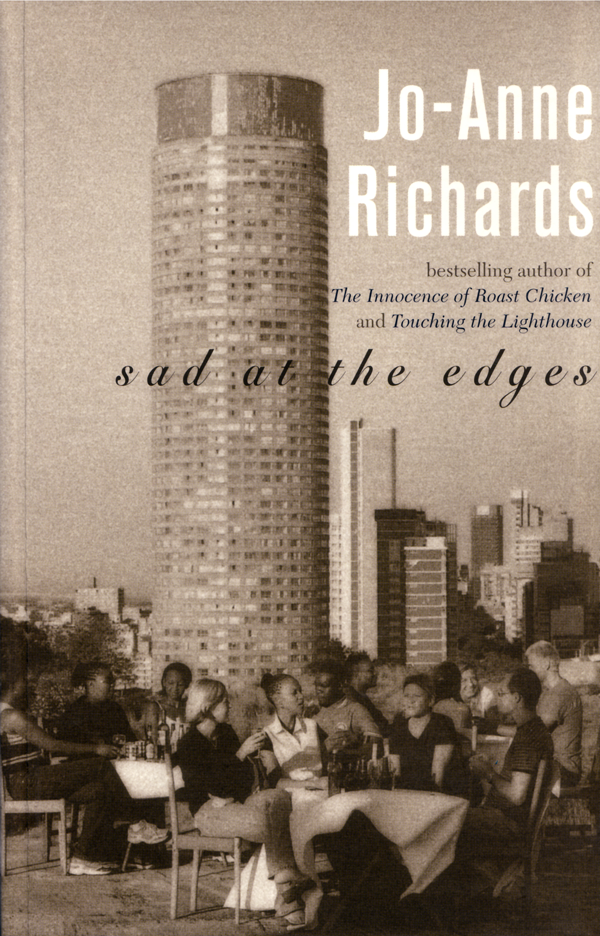
Sad at the Edges
Megan returns to Johannesburg from London to find her cousin Francesca using the appearance of an ordinary life to mask a darker past. As the city — restless, vivid, caught between euphoria and disenchantment — pulls them both into its extremes, Megan and Francesca are dragged toward a reckoning neither quite wants. A story of hope and recovery, told with the lyricism of The Innocence of Roast Chicken.