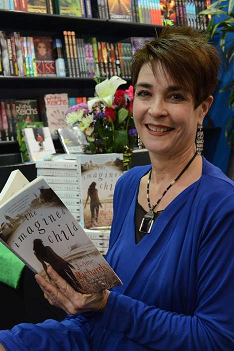

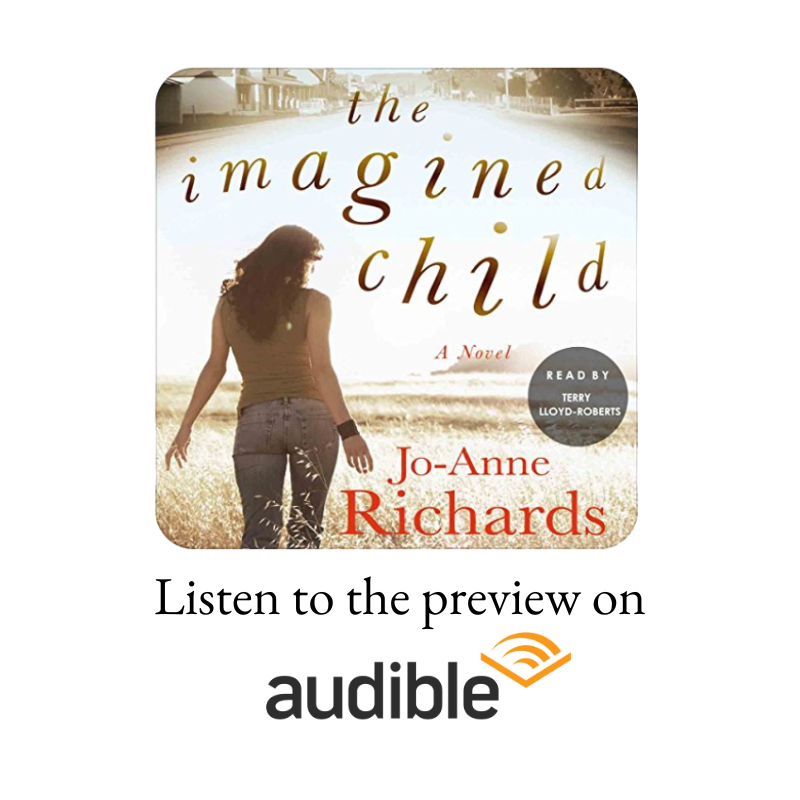
The Imagined Child
Odette leaves Johannesburg to make a new start in Nagelaten, a small Free State town. A writer for a popular TV soap, she appears to be searching for a less complicated life. But others think she’s escaping – to a place where she knows no one and won’t have to share her secrets.
Life in Nagelaten isn’t as simple as it seems. The town also holds secrets. Why do people insist there’s no crime, all evidence to the contrary? Who is the strange outcast, whom she feels sorry for, yet doesn’t quite trust? And why will no one tell her his story?
Odette is caught up in two deaths – a baby in the United Kingdom whom her troubled daughter, Mandy, is suspected of killing, and a brutal farm murder. Both cause her ordered life to unravel, while a new friendship forces her to question the silences of Nagelaten.
Events edge her towards the most courageous act of her life: facing the truth in order to save herself and her daughter.
In this taut psychological mystery, Jo-Anne Richards’s trademark lyrical style is combined with tight suspense that will keep you guessing until the last page
Author's Note on The Imagined Child
When my children were young, we had a succession of pets, including snakes and many variations on the cute rodent.
One day we brought home a hamster, named George. But a few days later we found that George was no longer alone in his deluxe hamster duplex. He had been joined by a cuter, smaller hamster, who could have emerged from nowhere but from George himself.
Well, Georgina was a good mother and brought Georgie junior up to be a strapping hamster lad, slightly larger than she. For a while, Georgina and Georgie junior rubbed along very well until one morning, Georgie junior was nowhere to be found. He had disappeared – except for the last chewed vestiges of his tail.
“Why?” sobbed my children. “Why would Georgina eat Georgie?”
I was at a loss. “Well,” I tried. “Maybe Georgie should have left home when he grew up? That’s what happens when children stay on indefinitely and irritate their mothers.”
For some completely unknown reason, my children believe this traumatised them forever. But I’m sure it’s a very natural urge. This is why a psychologist friend of mine gives talks to parents entitled: Why some animals eat their young.
The same, of course, is true the other way around. Most people feel the need to murder their parents at a certain point.
Hamsters aside, that’s more or less what my fifth novel is about. It explores our most basic and formative relationships – those with our parents and our children. I have tried to look squarely at the kind of unattractive urges that few people feel able to admit to in public (except perhaps obliquely through hamsters).
I have also tried to examine the push-pull of guilt and blame that surround our primary relationships. We are all damaged in some way – to a greater or lesser extent, genetically or through our upbringing.
At some stage, we all feel guilt over our children, and blame our parents. But if they’re responsible for the way we turned out, then surely we should blame their parents, and so on. How far back do we blame?
Through my voluntary work, I was privileged to meet parents of children with every kind of birth defect. I discovered that these parents undergo a process of grief. They lost, not the child itself, but their imagined child. They lost a version of themselves and were forced to reshape their personalities.
Over time, it became apparent to me that the parents of ‘typical’ children, while they might struggle to share them, also experience quite difficult feelings. The unalloyed joy expressed by mothers at the school gate, which alienated those of us struggling with motherhood, is deceptive.
These realisations began a creative process which finally found expression in this book. One of the human traits that has always fascinated me as a novelist is our propensity to lie – in order to maintain a perceived place in society and an image of self. I became interested in finding ways to portray this, and to explore a largely taboo area.
In our increasingly child-centred world, in which children are granted a rarefied, almost sanctified space, society disapproves of ambivalence. There is silence around the difficult feelings that most, possibly all, parents feel; the fact that love is not inconsistent with experiencing the loved one as a burden, and sometimes wishing that burden gone.
I am fascinated by the idea that every one of us is damaged in some way. We inherit bad eyesight, creaky back, a propensity to heart attacks or to depression. We are affected by a controlling parent or one who is too weak, by one who punishes too viciously or who fails to discipline at all. How we come to terms with that damage, and whether we are able to forgive, determines the kind of adults, and ultimately the kind of parents we become.
If you think about it, the same goes for our relationship with the country we were brought up in, which serves as both parent and child. We blame it for our damaged selves, and feel guilt for the way it turned out. I hope my story also manages to resonate with some of this complicated relationship with our communities and our nation.
The Imagined Child is about secrets, the kind we keep to maintain our own sense of self and our place in society. And it’s about trying to find the redemption which comes from facing our own flaws.
Reviews: The Imagined Child
Jo-Anne’s trenchant observation of human behaviour, always laced with humour, makes for an engrossing read
– Athol Fugard
A captivating and quietly confident tale of life in the new South Africa. Jo-Anne Richards has a deft touch with words and uses it to weave a personal story set in a nation still trying to settle after the dust
- Shubnum Khan
When you start reading The Imagined Child, don’t be surprised to look up and discover it’s gone 3 a.m. Jo-Anne Richards takes the urbanite-moves-to-the-platteland-to-find-herself motif and twists it brilliantly, lacing the narrative with such palpable tension that while immersed in it, I often had to remind myself to breathe. This superbly written, searing study of secrets, motherhood and guilt – both personal and historical – will stay with you long after you’ve finished it
- Sarah Lotz
The Imagined Child is a searing and intimate look at how guilt and fear make us do terrible things, and Jo-Anne Richards delivers a powerful and perceptive deconstruction of parenthood and culpability. Her trademark twist in the tale is a sudden punch to the gut, and leaves the reader breathless for days afterwards. The Imagined Child is an impeccably researched – and sometimes very funny – portrait of upheaval and recreation in the New South Africa
- Diane Awerbuck
Writing with her trademark care and precision, Joanne takes us into smalltown South Africa and has us look deep into some complicated souls. She tells a tightly-woven tale of the difficulties of being both a parent and a child, of the fraught complexities of friendship and community, and the uncertain nature of our loyalties. She jumbles together the best and the worst of humanity, so that in the end one is not certain which is which. It is all firmly located in a South Africa that is both unnervingly familiar and yet full of surprises. This is her fifth novel, and maybe her best yet
- Anton Harber
More from Jo-Anne
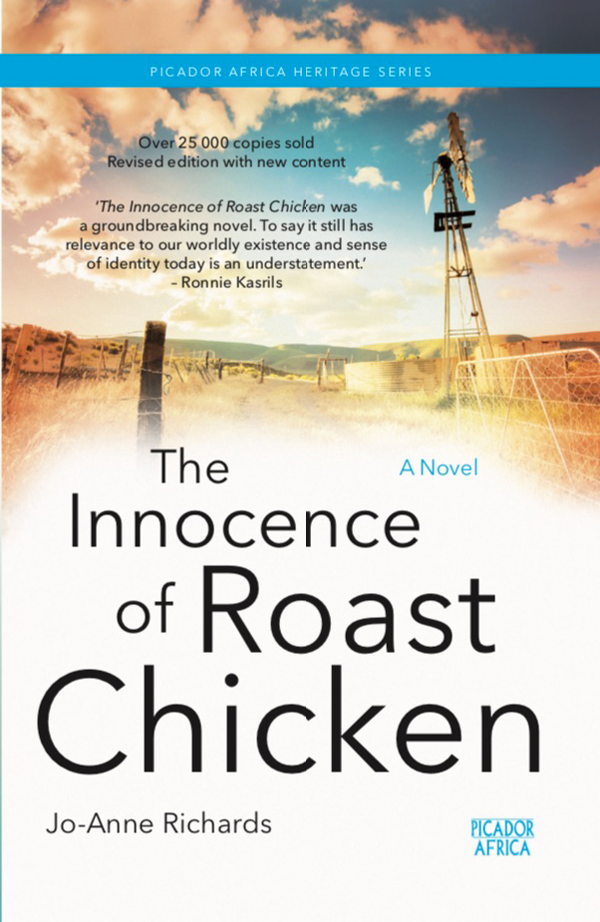
The Innocence of Roast Chicken
Set on a Free State farm in the 1960s, this is the story of an Afrikaans/English family’s seemingly idyllic life, seen through the eyes of young Kate — and the fragile web of relationships that a single, brutal incident will shatter. Years later, in the heady, uncertain Johannesburg of 1989, the past refuses to stay buried.
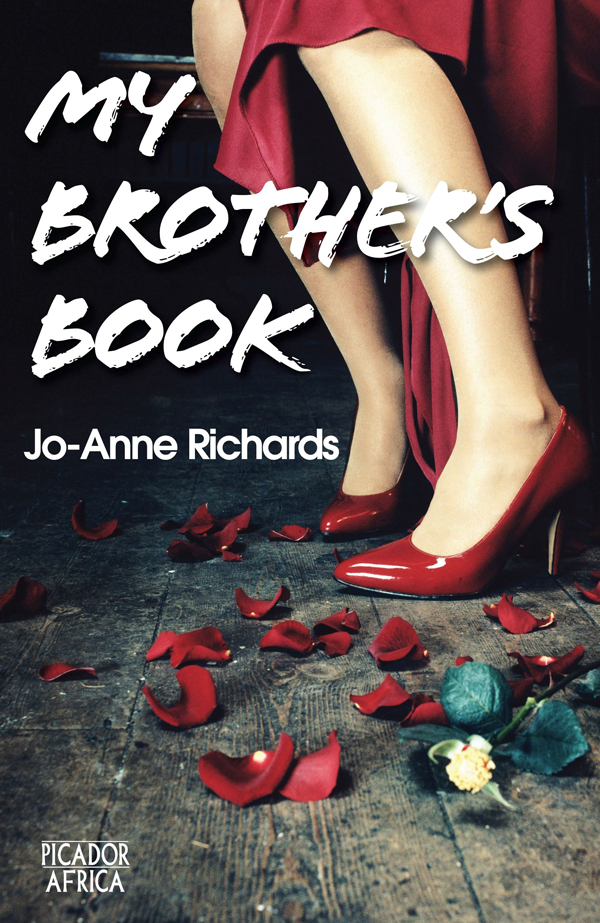
My Brother's Book
I was born on page 23 of my brother’s book. On page 52, before the whole world, I betrayed him. Spanning two siblings’ lives from a nomadic 1960s childhood to an uneasy adulthood in 2004 Johannesburg, this is a story of betrayal and atonement — and of a brother and sister forced to reconcile their fierce love with thirty years of anger.
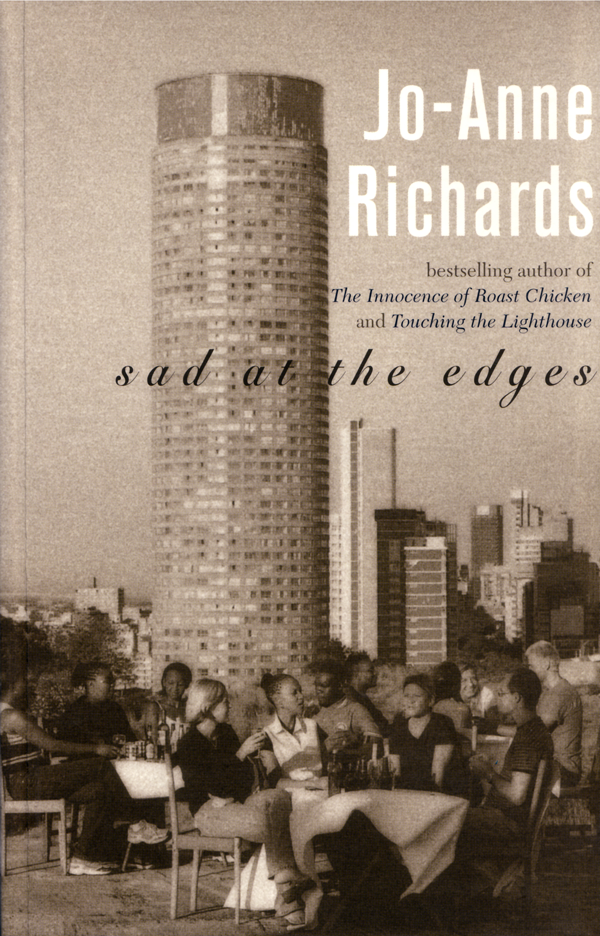
Sad at the Edges
Megan returns to Johannesburg from London to find her cousin Francesca using the appearance of an ordinary life to mask a darker past. As the city — restless, vivid, caught between euphoria and disenchantment — pulls them both into its extremes, Megan and Francesca are dragged toward a reckoning neither quite wants. A story of hope and recovery, told with the lyricism of The Innocence of Roast Chicken.
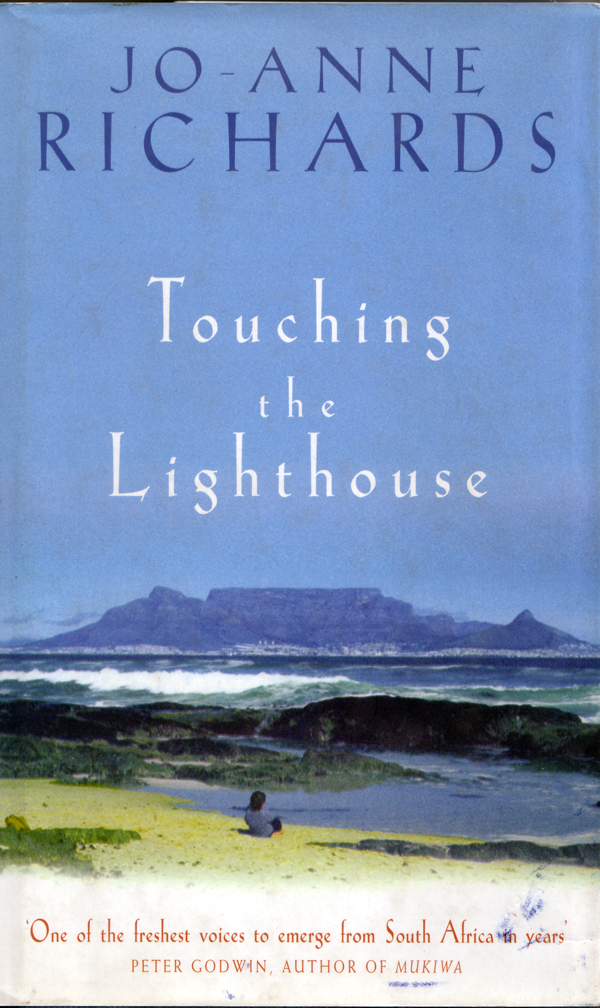
Touching the Lighthouse
Susan and Jennifer are two young women in search of their adult selves, in a South Africa charged with the tension of historic change. Their reckless passion finds an unsettling foil in Maud, their cleaner — perhaps the only one who can see where their futures are really headed. A worthy successor to The Innocence of Roast Chicken, written with the same acute sense of place and time.